
The joint US-Israeli strike of February 28, 2026 that killed Khamenei was full-spectrum corporate warfighting; satellites, AI, cloud, autonomous swarms, and information dominance working as one lethal system. India watched. It must now evolve.
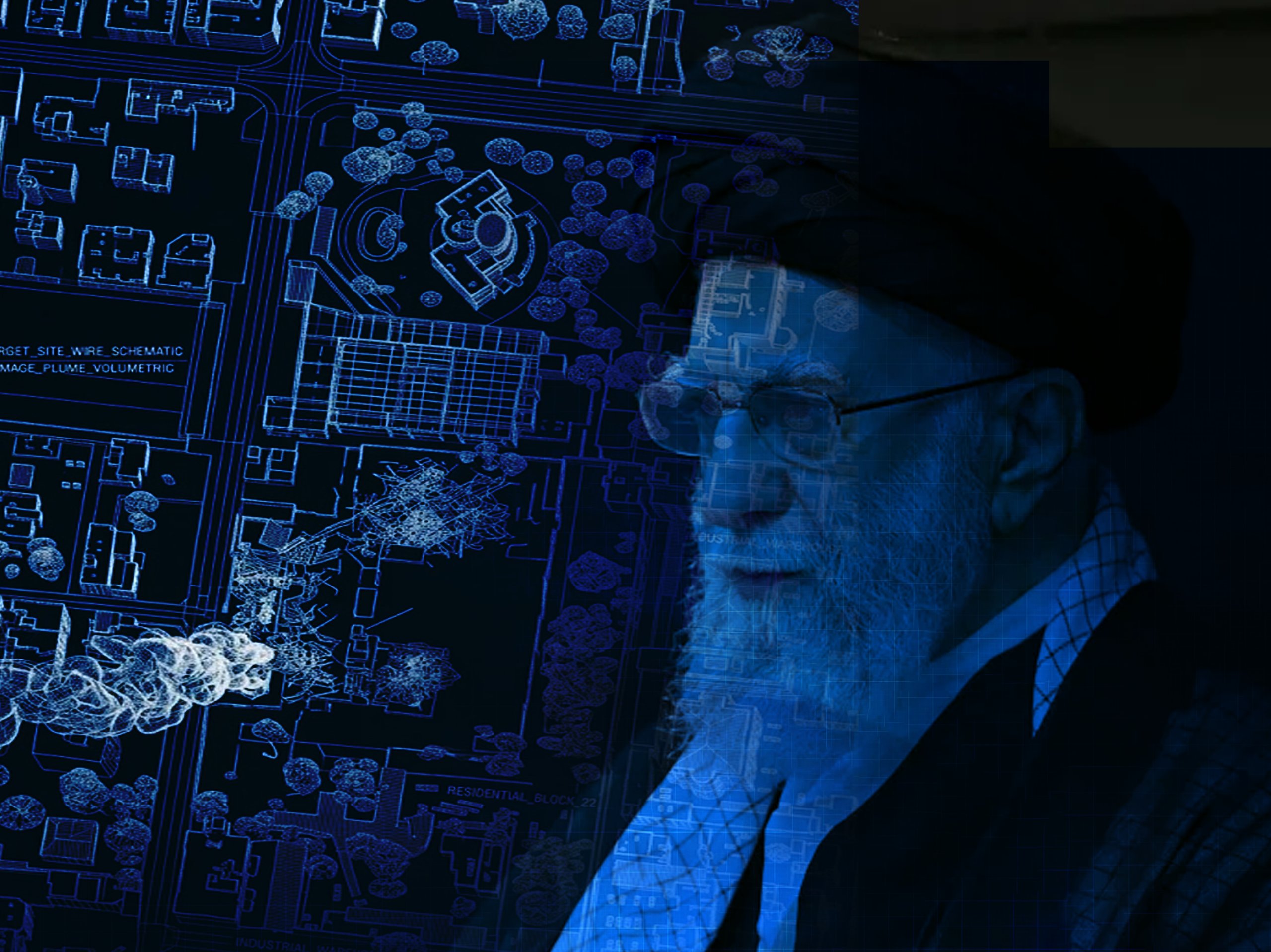
In the predawn hours of Saturday, February 28, 2026, something extraordinary happened in the Shemiran district of northern Tehran. Khamenei, Iran’s Leader for 37 years, the man who had survived assassinations, wars, and decades of sanctions, was killed not primarily by a bomb, but by an algorithm. The operation, codenamed Epic Fury, was the first high-level decapitation strike in military history to be substantially driven by artificial intelligence across the kill chain. By the time Israeli aircraft and American munitions found their target, Palantir’s software had fused the intelligence, Anduril’s autonomous drone swarms had penetrated Iran’s air defences, Starlink had held communications together across a contested electromagnetic environment, and Claude’s Anthropic’s AI model, deployed on classified US defence networks had processed petabytes of intercepted Persian-language communications and generated targeting scenarios that human analysts would have taken weeks to produce. Ukraine had proved that Silicon Valley could hold a frontline. Venezuela had proved it could topple a government and secure an oil state. Iran was where both lessons converged into a single, decapitating strike.
Invisible Architecture of a Visible Strike
When news of Khamenei’s death broke, global attention fixed on the ordnance: 200 Israeli fighter jets in the largest military flyover in Israeli Air Force history, US bunker-busters, strikes across 24 Iranian provinces. What received less coverage was the invisible architecture that made it possible. Starlink was central long before the first missile launched. The Trump administration had covertly smuggled thousands of Starlink terminals into Iran in the months prior, sustaining a communications corridor for intelligence sources inside the country even as the Iranian regime drove national internet connectivity down to 4% of normal levels. When Iranian forces shut down Starlink networks, they were confiscating the same infrastructure that was feeding real-time intelligence upstream to US planners. Satellite connectivity was not a supporting element; it was the nervous system of the operation. Palantir provided the operational software layer; sensor fusion, targeting architecture, and the command-and-control framework that translated intelligence into actionable strike packages. Its Lattice system enabled autonomous drone swarms to communicate threat data laterally: when Iranian air-defence radar locked onto one drone, the entire swarm adapted, dispatching subgroups for electronic deception and anti-radiation strikes in real time. This is software-driven warfare weapons that are, as defence-tech investors now openly describe them, “code wrapped in aluminium shells.” Anduril’s YFQ-44A drones, operating through Hivemind AI pilots capable of executing complex missions without GPS, satellite communication, or human operators, demonstrated capabilities that rendered Iran’s hardware-centric air defences clumsy against algorithmic iteration. Shield AI’s autonomous systems operated in environments where traditional military drones would have been jammed and blinded. Amazon Web Services provided the cloud backbone, data continuity, logistics support, and the secure infrastructure that kept coalition planning intact against Iranian cyber-retaliation, which simultaneously targeted US military bases in Bahrain, Kuwait, Qatar, and the UAE. Anthropic’s Claude AI, which had already proven itself in Venezuela processing intelligence, mapping command chains, and generating scenario simulations that compressed weeks of human analysis into hours, ran the same playbook on Iran, this time trawling Persian communications and mapping fractures in the Revolutionary Guard’s targeting structure. Trump banned Anthropic the day before the strikes. US Central Command used Claude anyway, through Palantir and AWS, as bombs fell on Tehran. The corporate stack had become so load-bearing that a presidential order could not sever it mid-operation. It was not peripheral to American military power. It was the operation.
From Sindoor to Stack
For Indian strategic planners watching the war in West Asia unfold, the lesson is not comfortable. India has pieces of this architecture. It does not have the stack. India’s defence-industrial base is strongest where the old model still dominates: physical production. Native manufacturing capability is real, and Atmanirbhar Bharat has added momentum. But industrial production is the bottom layer of the stack US operation in West Asia demonstrated. Everything above it; connectivity, cloud, AI, autonomous systems, information operations is where India’s ambition is still catching up with requirement. India is building a commercial space sector, with domestic satellite launches accelerating and a small but growing constellation in development. It is not yet capable of blanketing a contested theatre with resilient satcom, let alone covertly sustaining intelligence networks inside an adversary state but the foundation is being laid. In operational software and autonomous systems, an iDEX-incubated startup ecosystem is producing native drones and ISR platforms, promising early capability, not yet embedded in classified pipelines at wartime depth. In frontier AI, India has launched sovereign large language model initiatives and is developing government-facing AI infrastructure but the institutional pathway from commercial deployment to classified defence integration remains nascent. In the information domain, digital public infrastructure is maturing, though platform-level influence at global strategic scale remains beyond reach. Iran’s near-total internet blackout could not sever the intelligence flow because a commercial satellite alternative existed. India is working toward equivalent resilience. However, it is not there yet.
The operation that killed Khamenei was not a triumph of numbers. Iran was never going to match US and Israeli firepower. It was a triumph of the stack; satellites, AI, autonomous systems, cloud, and information dominance mobilised as one unified architecture. India already knows this, because it has lived it. Operation Sindoor 2025 was India’s own inflection point. AI fused multi-source battlefield data in real time. Native electronic intelligence software evolved mid-operation to pinpoint and rank threats. Over 600 drones were defeated in a single wave. Loitering munitions and FPV strike drones executed precision hits on high-value targets. The instinct was right. The native capability was real. But Sindoor also exposed the distance still to travel. The stack America deployed over Tehran was embedded in doctrine. India’s is battle-proven but not yet fully built. India need not replicate America’s model. But the underlying logic is non-negotiable: states that cannot draw on native corporations across the full warfighting stack will operate at a categorically different level than states that can. Sindoor proved India has the instinct. It now needs the stack and the institutional velocity to build it before the next conflict arrives.