
Iran found the gap in missile defence. It’s called a cluster munition. The weapon is banned by international treaty. Neither Iran, Israel, nor the United States signed it. The ban is technically alive and operationally irrelevant.
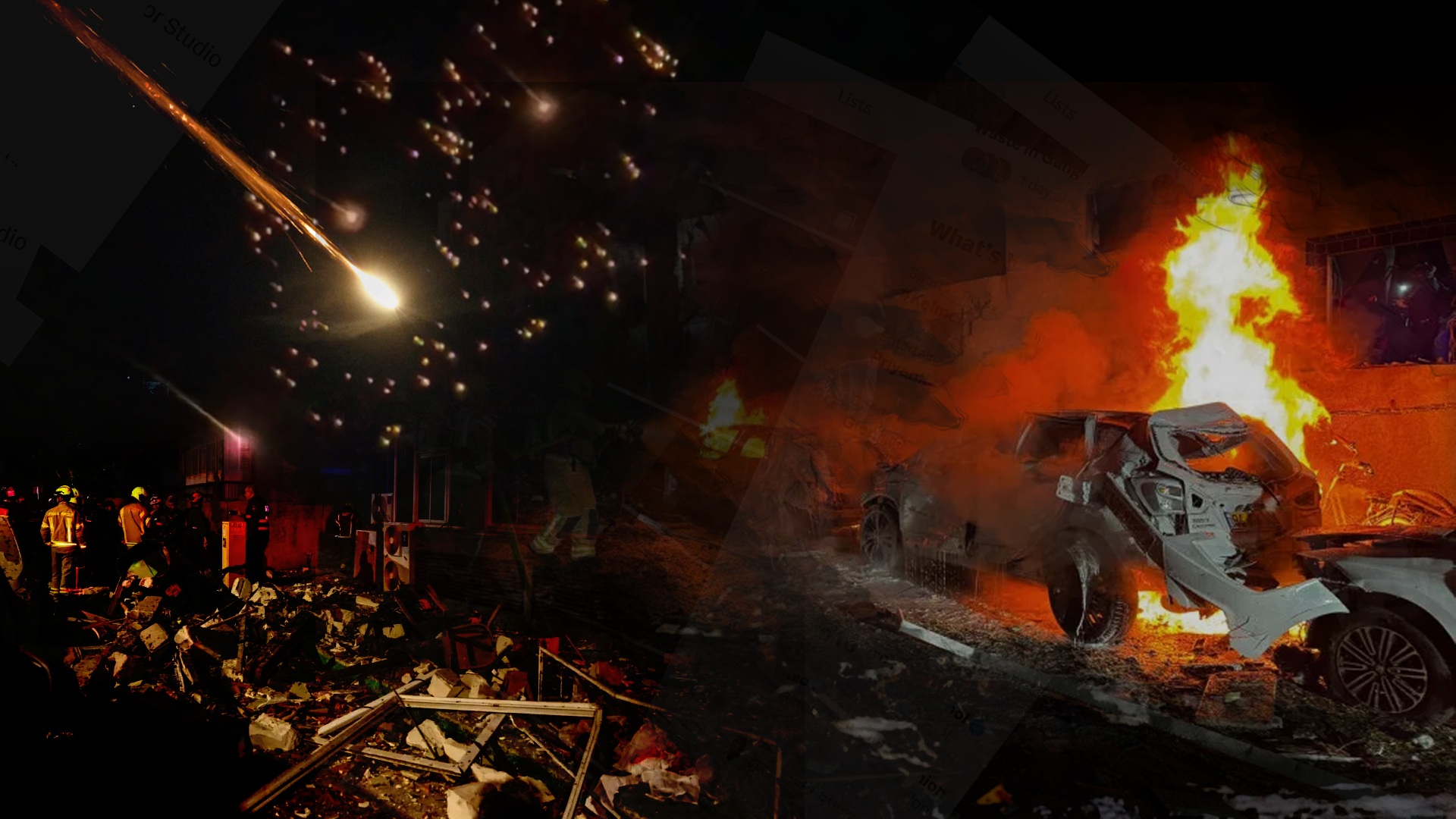
On the night of 5 March, Israelis watching the sky over greater Tel Aviv did not see a single inbound fireball. They saw dozens, organised and steep, descending in unison. What registered on the ground was not one explosion but a dispersal event across multiple city blocks simultaneously. That distinction is the substance of this conflict’s most consequential weapons development, and it is not a new problem. It is a very old one that the international community has spent fifteen years pretending to have solved.
A cluster munition is a dispenser, not a warhead. The ballistic missile re-enters the atmosphere and at altitude the casing splits open. Submunitions scatter across a radius of several kilometres with no guidance and no correction after release. Each falls independently, arms on descent, and detonates on impact. Iran’s standard configuration releases between 24 and 80 submunitions per missile, each carrying approximately 2.5 kilograms of explosive. The heavier variants carry a thermal coating allowing survival through re-entry on a long-range trajectory, a design feature that distinguishes Iran’s cluster-configured missiles from shorter-range tactical systems and speaks directly to the intended application. The target area is not a point. It is a neighbourhood.
The operational rationale is straightforward attrition management. With its launcher fleet degraded by sustained strikes, Iran faces a diminishing capacity to generate mass salvo effects. Cluster munitions restore per-round efficiency, converting one interceptable airframe into dozens of simultaneously falling submunitions and solving the salvo problem at the munition level rather than the force level. Beyond immediate lethality, the weapon imposes a compounding cost on the defender’s interceptor stockpile, forcing the expenditure of multiple intercepts against submunitions from a single parent missile. Under attrition conditions on both sides, that exchange ratio carries strategic weight.
The damage to layered missile defence architecture is structural. Long-range intercept systems are optimised against the parent missile and have no role after cargo release at altitude. Terminal-phase systems can engage individual submunitions but were not engineered for simultaneous saturation across a dispersal field. In documented cases the parent missile has been successfully intercepted while submunitions already released continued to impact. The intercept, by conventional measure a success, produces no protective effect on the ground. This is not a gap that investment in existing intercept technology closes. It is a consequence of the weapon’s physics.
Secondary hazard extends lethality beyond the strike itself. Many submunitions fail to detonate on impact and remain on the ground as live ordnance, functionally equivalent to scattered anti-personnel mines. Post-conflict clearance operations in Lebanon, Kosovo, Laos, and Yemen have recovered active submunitions decades after original delivery. The strike ends. The contamination does not, and civilian populations absorb that residual cost for generations.
The legal framework governing the weapon is the Convention on Cluster Munitions, concluded in Dublin in 2008 and in force from 2010. It is categorical in its prohibition on use, production, transfer, and stockpiling, with no military necessity clause and no permitted reservations. 111 states have ratified it. Iran has not signed. Neither has Israel. Neither has the United States, which approved five separate cluster munition transfers to Ukraine between July 2023 and April 2024. Neither has Russia, which has deployed them extensively across Ukrainian urban terrain since 2022. Neither has China or Pakistan. The states absent from the convention are not peripheral actors. They are every military power with a serious land war in its operational planning, every state with a meaningful cluster munitions stockpile, and every belligerent currently employing the weapon in an active theatre. The convention’s membership and the world’s military reality occupy almost entirely separate categories.
Customary international humanitarian law binds all states regardless of treaty membership and prohibits indiscriminate attacks against civilian areas. Multiple human rights bodies have assessed cluster munition use in populated areas as a war crime. That assessment applies equally to every non-signatory deploying the weapon in an active theatre. Past use in Afghanistan, Iraq, and Laos caused civilian harm that persists to this day. The law does not distinguish between belligerents. The accountability mechanisms do.
The Convention on Cluster Munitions did not fail because it was poorly drafted. It failed at the point of design. A prohibition that the United States, Russia, China, and Israel declined to join was never a ban. It was an agreement among states that had already decided not to use the weapon. Iran’s current employment is the most visible expression of that void, not the cause of it. When the architects of the international security order exempt themselves from its humanitarian constraints, the system does not bend. It breaks.