
Pakistan’s resort to the UNSC on the Indus Waters Treaty collapses on contact with the law of treaties, the law of state responsibility, and the Charter regime on the use of force.
On 22 April 2025, in the Baisaran meadow above Pahalgam, terrorists separated tourists by faith and shot twenty-five of them and one local. The Resistance Front, a proxy of the Pakistan-based Lashkar-e-Taiba, claimed the attack. The following day, India announced that the Indus Waters Treaty of 1960 would be held in abeyance until Pakistan credibly and irrevocably abandoned its support for cross-border terrorism. On 7 May 2025, Indian forces struck terrorist infrastructure in Pakistan. A cessation of firing followed on 10 May 2025. The abeyance remained.
From the start, Pakistan’s response was rhetorical. The abeyance was cast as an act of war, branded “water weaponisation,” and equated with terrorism. A year on, on the first anniversary of the Baisaran massacre, Pakistan has carried that posture to the United Nations Security Council, demanding that India “restore full implementation” of the Treaty and warning of “grave humanitarian consequences.” The recourse asks the Council to examine India’s abeyance in isolation from the conduct that produced it. The framing has a certain neatness. Tested against the law of treaties, the law of state responsibility, and the Charter regime on the use of force, it does not survive contact.
The Security Council, under Article 24 of the Charter, holds primary responsibility for international peace and security. It is not a treaty-interpretation body, nor a tribunal over the performance of a 1960 bilateral instrument. The Treaty supplies its own graded dispute mechanism under Article IX: Permanent Indus Commission, Neutral Expert, Court of Arbitration. Article XII(3) requires that any modification proceed by duly ratified treaty. India invoked that provision twice, on 25 January 2023 and 30 August 2024, seeking review of the Treaty in light of changed circumstances and Pakistan’s obstruction of permissible Indian projects on the Western Rivers. Pakistan declined to engage. Its decision to bypass this architecture and approach the Council is itself an admission that the bilateral machinery cannot deliver the political outcome Islamabad seeks. “Grave humanitarian consequences” is rhetoric in search of jurisdiction, not jurisdiction itself.
The Treaty is not a static allocation of water. Its Preamble grounds the instrument in “goodwill, friendship and cooperation.” Article VIII establishes a Permanent Indus Commission that presupposes ongoing good-faith engagement. Article IX presupposes a working bilateral relationship. Article XII(3) presupposes that modification proposals will receive serious response. A state that refuses to engage with lawful modification cannot credibly claim the high ground of treaty fidelity.
Article 26 of the Vienna Convention on the Law of Treaties binds parties to perform every treaty in force in good faith. Good-faith performance is not discharged by partial compliance with allocation rules while the foundational conditions of peaceful coexistence are torn up beneath them. India’s position, that sustained Pakistani sponsorship of cross-border terrorism, culminating in Baisaran, ruptured the premise on which cooperation rests, is not creative interpretation. It is the black-letter application of pacta sunt servanda (treaties must be performed in good faith).
Two further VCLT doctrines support, though do not exhaust, India’s measure. Article 60 permits suspension for material breach, including violation of provisions essential to a treaty’s object and purpose. Where that object includes cooperative water-sharing premised on peace, state-supported terrorism is not collateral conduct; it breaches the animating premise. Article 62, on fundamental change of circumstances, supplies a narrower but reinforcing ground.
The doctrinal home for abeyance lies in the law of countermeasures. Articles 22 and 49 to 54 of the ILC Articles on State Responsibility require that countermeasures be non-forcible, proportionate, directed at the responsible state, taken to induce compliance, and, where possible, reversible. India’s measure meets each. It is non-forcible, targeted, proportionate to the breach it answers, and reversible: the Treaty stands, and the condition for restoration is on the public record. Pakistan must credibly and irrevocably abjure support for cross-border terrorism. It is also purposive, directed at the customary obligation, reinforced by Security Council Resolution 1373 (2001), that every state prevent the use of its territory for terrorist acts against others.
India’s strikes of 7 May 2025 rest on a separate footing. Article 51 of the Charter preserves the inherent right of self-defence. Post-2001 practice, anchored in Resolutions 1368 and 1373, accepts that armed attacks may emanate from non-state actors, and that defensive action may extend to the bases from which they are mounted where the territorial state is unwilling or unable to suppress them. The cessation of firing on 10 May 2025 left the abeyance untouched. The Treaty position is doctrinal, not transactional; it does not rise and fall with the tempo of military exchanges.
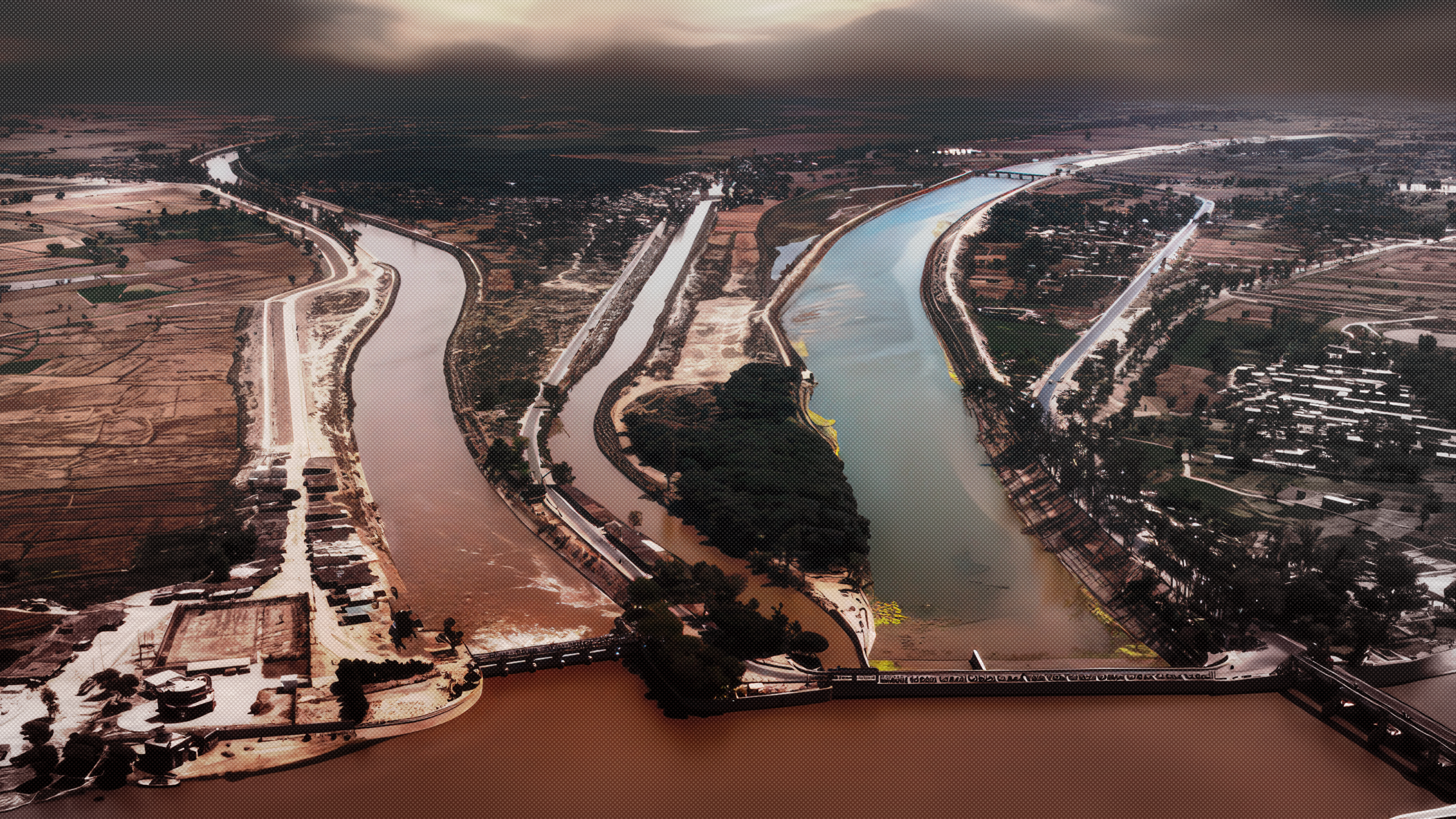
Pakistan’s “weaponisation” claim conflates the Treaty’s cooperative scaffolding with its physical entitlements. India has not diverted, dammed, or interdicted Pakistani waters in violation of Articles II and III. What it has suspended is the cooperative apparatus: data exchange, Commission engagement, treaty-level dispute mechanisms. If Pakistan’s grievance were that India had unlawfully constructed or operated works, that would be a Treaty-internal dispute, amenable to Article IX. The choice of the Council rather than the Treaty’s own forum is not a performance dispute. It is a narrative posture.
The legal contest is not between treaty sanctity and treaty derogation. It is between two readings of obligation. The first is integrated: good faith and reciprocity are constitutive of the duty to perform. The second is fragmented: a state may sponsor armed attacks against its neighbour while demanding uninterrupted strategic benefit. The first is the black-letter of international law. The second is a position no treaty regime has ever sustained.
India’s stand is principled, conditional, proportionate, and reversible. It does not weaponise water; it withholds cooperation from a party that has weaponised territory. The path back to the Treaty is open. It runs through Pakistan’s credible, irrevocable, and verifiable abandonment of cross-border terrorism, through no other forum, and certainly not the Security Council.