Technology

International Affairs, Technology

India Stopped An ISIS-K Bio-Terror Plot The World Needs To Talk About

An ISIS-K bio-terror attack that could have killed over a hundred thousand people was just stopped in India. Why isn’t the world talking about it? In a world saturated with headlines of conflict and calamity, an extraordinary victory against terrorism has gone almost unnoticed beyond specialist circles. Indian authorities quietly dismantled a bio-terror plot so chilling in ambition that its success would have rewritten the story of global security. Just days ago, India’s Gujarat Anti-Terrorism Squad (ATS) dismantled an Islamic State Khorasan Province (ISIS-K) cell, the South Asian affiliate of the Islamic State preparing to unleash a mass biological terrorist attack. At its core lay ricin, a toxin so lethally efficient, one of the deadliest-known, derived from something as ordinary as the castor bean. It was a scheme as simple as it was monstrous, poisoning the essentials of life itself, and it was stopped just in time Its story came to light with an arrest that barely drew notice. Acting on specific intelligence, Gujarat ATS arrested Dr Ahmed Mohiyuddin Saiyed, a China-educated MBBS graduate, in Ahmedabad for his links to ISIS-K. Investigators say he had been extracting ricin from castor oil, four litres of which were recovered from his possession, and had already procured laboratory equipment and begun initial chemical processing when officers arrested him. According to police sources, his plan was as insidious as it was horrific: to poison public drinking water supplies and even food (prasad) at Hindu temples, thereby silently killing masses of civilians. Officials estimate the plotters intended to kill “scores of people” and were aiming for catastrophic casualties. In worst-case scenarios, analysts have speculated that hundreds of thousands of lives might have been at risk, had a major water reservoir or a large temple gathering been successfully poisoned. The ambitious reach of this foiled plot underlines why it deserves far more international attention. This was not a lone wolf or a fringe fanatic acting in isolation; it appears to have been coordinated by ISIS-K, working through educated operatives. Dr. Saiyed’s handler, Abu Khadija, was an Afghanistan-based terrorist associated with ISIS-Khorasan, and he potentially arranged arms deliveries for the cell via drones crossing the Pakistan border. Saiyed did not act alone. Two other accomplices, 20-year-old Azad Suleman Sheikh and 23-year-old Mohammad Suhail from Uttar Pradesh were arrested alongside him. These men had spent the last year conducting reconnaissance on potential targets across India, scoping out crowded public places where a poison attack could yield maximum chaos. Among the locations they surveilled were Asia’s largest wholesale produce market in Delhi (Azadpur Mandi), a bustling fruit market in Ahmedabad, and even the headquarters of RSS in Lucknow. The chosen targets, places of food, water, community life, speak volumes about the terrorist’s cruel intent to strike at the very heart of ordinary society. By targeting temple prasad (food offered to Hindu devotees) and municipal water, they aimed to turn sustenance into a weapon. The depravity is chilling. Ricin itself is a nightmare agent. Tasteless and deadly, it is classified as a Category B bioterrorism agent under the Chemical Weapons Convention. A dose of a few milligrams can kill an adult if delivered effectively, and there is no antidote. Notably, ricin is not a typical weapon in the terrorist arsenal. It has surfaced mostly in fringe plots and isolated incidents (such as poisoned letters addressed to US Presidents Barack Obama and Donald Trump in past years), but never before at this scale. The rarity of ricin attacks is partly why this plot is so alarming: intelligence agencies warn that ISIS and its affiliates have been actively discussing bio-terror tactics in encrypted chats, marking a strategic shift towards unconventional methods. In other words, the very fact that jihadist groups are exploring bioweapons is a worrisome evolution of terror. Unlike bombs or guns, a biological or chemical attack can sow panic far beyond the immediate victims. It contaminates the basic trust we place in our communal resources. As one counter-terror official noted, poisoning a city’s water or food supply would not only kill people but “wreak havoc in the minds of the people”, inflicting psychological trauma on society at large. Had the ricin plot succeeded, it could have easily been one of the deadliest terror attacks in modern history, a silent mass murder stretching over days or weeks as poisoning victims fell ill, and an entire populace plunged into fear. Thankfully, that nightmare never came to pass. Indian security forces acted on a tip and caught the plotters red-handed, seizing their cache of castor oil, weapons (including imported semi-automatic pistols), and digital evidence of their plans. The swift operation, coordinated by Gujarat ATS with central intelligence support, likely saved countless lives. It was, in effect, a major victory in the global fight against terrorism. Yet outside of India, this triumph registered barely a blip. Global media outlets that routinely headline terror incidents offered only cursory reports, if any, on India’s ricin plot bust. Why? One reason may be that success stories simply garner less attention, when disaster is prevented, there are no dramatic visuals of carnage to propel 24/7 news coverage. A bomb that didn’t go off is often a footnote, while a bomb that explodes is breaking news. This asymmetry in coverage creates a perverse situation where we pay more heed to terrorist violence than to vigilance that averts violence. There is also an uncomfortable truth about geographic bias. Had a quarter-million people in a Western city been in danger from a foiled bio-attack, one suspects it would dominate international headlines and talk shows. But when such a plot is foiled in India, it struggles to capture the world’s imagination. This is despite the fact that ISIS’s operations in South Asia are very much a global concern, the ISIS-K module behind the ricin plot has ties spanning Afghanistan and Pakistan, and reflects the same menace that threatens cities from London to New York. Indeed, an Indian investigation report recently pointed out how Pakistan’s intelligence service has been abetting ISIS-K’s activities,
International Affairs, Technology

Packets to the Party: How DeepSeek Funnels Data to Beijing

For American fund managers and Indian start‑ups alike, using the chatbot could be tantamount to CC‑ing a rival on every brainstorming session. When the Chinese start‑up DeepSeek released its R‑1 chatbot in January 2025, the launch felt like a Silicon Valley fairy‑tale told in Mandarin. Two months and fifty‑seven million downloads later, the numbers were jaw‑dropping. On Apple’s U.S. App Store, it eclipsed ChatGPT, in India, it jostled for the top spot in every major language category. Reporters praised its fluency and its price tag; free. What mattered less in that honeymoon week was how the software moved across the internet. On April 16, 2025, researchers working with the U.S. House Select Committee on the Chinese Communist Party released their report, DeepSeek Unmasked: Exposing the CCP’s Latest Tool for Spying, Stealing, and Subverting U.S. Export Control Restrictions, revealing that every user prompt, device fingerprint and behavioural tic is routed across the Pacific to servers run by China Mobile—a carrier the U.S. Department of Defense lists under Section 1260H as a Chinese Military Company. The first rupture appeared on 29 January when cloud security firm Wiz stumbled upon an exposed ClickHouse database tagged “ds‑log‑prod‑001”. Anyone with a browser could have accessed more than a million log lines: raw chat history, API keys, and even internal service tokens. Wiz engineers demonstrated that with two clicks they could seize “full database control”, inject malicious code and pivot into the rest of DeepSeek’s infrastructure. A week later mobile forensics specialists at NowSecure published a parallel autopsy of the iOS build. Their findings read like a checklist of everything Apple’s security team tells developers not to do: hard‑coded encryption keys, deprecated 3DES ciphers and App Transport Security switched off globally, allowing chats to travel unencrypted. The company urged enterprises to ban the app outright. However, DeepSeek’s parentage turned out to be even more troubling. Corporate registries in Zhejiang and the Cayman Islands show the chatbot is a wholly owned offshoot of High‑Flyer Quant, a hedge fund founded in 2016 by the 38‑year‑old trader  and CEO of Deepseek Liang Wenfeng. Reuters reporting confirms that High‑Flyer pivoted from equity markets to artificial intelligence research in 2023, building two super-computing clusters stuffed with Nvidia A100 processors before U.S. export controls came into force. On Capitol Hill the discovery set alarm bells ringing. Washington had barred Beijing from buying the world’s most coveted AI chips, yet here was a Chinese firm running a model of near-GPT-4 heft on hardware Washington thought safely out of reach. The House Select Committee on the Chinese Communist Party (CCP) further codified those fears in their recent report, accuses the firm of “spying, stealing and subverting” by siphoning petabytes of conversational data and laundering it through a thicket of shell companies to evade export rules. Committee members John Moolenaar and Raja Krishnamoorthi want answers not only from DeepSeek but from Nvidia, whose chips, roughly 60,000 of them, according to Business Insider—ended up in Liang’s Hangzhou data centre via middlemen in Dubai and Singapore. Nvidia insists it obeys U.S. law, but lawmakers are now drafting “chip end‑user tracing” legislation to brand each accelerator with an immutable provenance tag. While American regulators consider subpoenas, New Delhi has already moved. On 5 February, the Indian Ministry of Finance circulated an internal directive forbidding officials from using DeepSeek (and ChatGPT) on government devices, citing risks to the “confidentiality of government documents and data.” Sources say the Computer Emergency Response Team of India (CERT‑In) is preparing a broader advisory under the new Digital Personal Data Protection Act that could push local app stores to delist the software if it fails a security audit. Other democracies have gone further: Italy, Australia and Taiwan have banned DeepSeek from public‑sector systems, with Taipei warning of “systemic espionage risk”. What exactly is at stake for countries such as the United States and India? Language‑model telemetry, say analysts, is qualitatively different from the browsing‑history bonanza that powered Cambridge Analytica. A generative AI does not merely record what users click, it ingests the content they originate, draft policy memos, legal arguments, unpublished code repositories, and intimate medical questions. Through a technique called model inversion, adversaries can reconstruct fragments of that training data. In practice, that means Beijing could fish out a U.S. senator’s embargoed speech or an Indian bureaucrat’s budget note and feed the text into targeted influence campaigns long before it ever reaches the public domain. Beyond political manipulation lies industrial espionage. High‑Flyer Quant’s pitch decks boast of “harvesting alternative data at planetary scale”. If every trade idea whispered into DeepSeek ends up in a Hangzhou warehouse, the company enjoys a real‑time map of market sentiment unavailable to Wall Street—and unpoliced by the Securities and Exchange Commission. For American fund managers and Indian start‑ups alike, using the chatbot could be tantamount to CC‑ing a rival on every brainstorming session. Defenders of open innovation counter that paranoia will balkanise the internet, that aggressive export controls slow scientific progress. Yet even optimists blanch at DeepSeek’s specific tactics. Wiz’s database trove confirms the app records keystroke timing, an input often used to build biometric “behavioural fingerprints”. Combine that with device IDs and IP addresses and you have a persistent, hard‑to‑spoof surveillance token attached to millions of users worldwide. In democracies, such dragnet profiling would trigger a cascade of court challenges; in China, recent amendments to the Counter‑Espionage Law oblige companies to hand that data to state agencies when requested. From Beijing’s vantage, the collection is both legal and geopolitically priceless, a mine of linguistic gold that can improve home‑grown AI models while enriching agencies tasked with mapping public opinion in rival states. The People’s Liberation Army has published openly about using sentiment analysis to anticipate unrest; DeepSeek offers a sentiment feed written by citizens themselves, timestamped and context‑rich. India’s vulnerability is especially acute because its flagship Digital Public Infrastructure, Aadhaar biometrics, the Unified Payments Interface, and the forthcoming Health Stack—bundles citizens’ identities into interoperable layers. If DeepSeek could cross‑reference Aadhaar‑seeded phone numbers with conversational data, it might assemble dossiers on millions of Indians at a granularity Western intelligence services could only envy. The Finance Ministry’s ban is thus

Technology

India’s Space Supremacy on Ascent

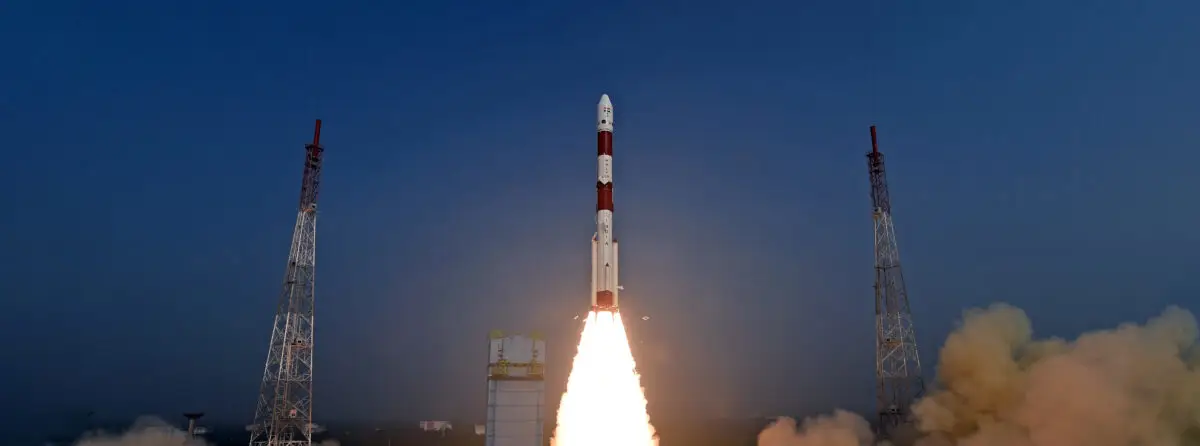
Chandrayaan-3, ISRO’s premier lunar exploration is a milestone in its path to achieving greater excellence, cost competitiveness and emerge as space power Human space exploration has predominantly been shaped by superpowers of the Cold War era, with US space agency, NASA and its Russian counterpart, Roscosmos leading the way. This is a thing of the past. In recent decades, the biggest surprising candidate in contention is the Indian Space Research Organisation (ISRO). Though it started late and faces financial limitations as well as technological constraints, ISRO has demonstrated remarkable resilience and determination, carving out a unique path as a top-tier global space agency. Established in 1969, almost two decades after NASA, ISRO embarked on its journey amidst a space race that was already in full swing. Tasked with the formidable mission of propelling India into the age of space technology and catching up with technologically advanced nations, ISRO’s journey has been far from smooth. In the aftermath of India’s nuclear tests in 1974 and 1998, the nation faced broad international sanctions. This development dealt a significant blow to India’s space aspirations when Russia, succumbing to pressure from the Western world, cited the Missile Technology Control Regime (MTCR) and withdrew from an agreement to transfer crucial cryogenic engine technology to India. The cryogenic engine technology was indispensable for the development of heavy-lift launch vehicles. Such a setback could have easily derailed India’s ambitions. Instead, it ignited ISRO’s determination, fuelling its drive towards self-reliance and innovation. Over next two decades, ISRO focused its efforts on developing its own cryogenic engine technology. Despite numerous challenges, India’s space agency remained unwavering and in January 2014, it successfully launched the GSLV-D5 launch vehicle, powered by an indigenously developed cryogenic engine. This achievement serves as an exemplary showcase of perseverance and resilience in the face of adversity, a testament to ISRO’s unwavering commitment to its mission and the Indian Republic. Yet, this is just one chapter in the compelling saga of ISRO, where hurdles are transformed into springboards for success. It is a testament to ISRO’s prowess in transforming adversity into opportunity, illuminating India’s flourishing technological capabilities. As ISRO navigated its journey, it pioneered a new paradigm in space exploration, combining cost-effectiveness with ambition, establishing itself as a trailblazer in affordable space technology. The Mars Orbiter Mission, known as Mangalyaan, epitomises this innovative spirit. Accomplished at a fraction of the cost of similar missions by other agencies, Mangalyaan was not just a frugal exploration but a powerful demonstration of ISRO’s formidable capabilities to the world. A vivid illustration of ISRO’s economical yet ambitious spirit is its mastery of multi-launch capabilities, allowing multiple satellites to be taken into orbit with a single rocket. ISRO showcased this brilliantly in February 2017 when it successfully launched a record-breaking 104 satellites aboard a single PSLV-C37 rocket. This launch included not only India’s own earth observation satellite but also miniature satellites from several international players, underscoring ISRO’s leading role in the global commercial space industry. Furthermore, ISRO’s ability to maintain budgetary controls without compromising on scientific endeavours sets it apart from many international counterparts. Whether it is launching the world’s lightest satellite or sending a mission to Mars at a cost lower than a Hollywood blockbuster, ISRO’s exemplary record reflects that cost-effectiveness and ambitious exploration can indeed go hand in hand. Chandrayaan-3, the latest iteration of ISRO’s flagship lunar exploration mission, is poised to embark on its momentous journey, aiming to achieve a soft landing in the Moon’s South Polar region on August 23, 2023 at 5:47 pm. This extraordinary endeavour, born out of years of rigorous scientific inquiry, stands as evidence of India’s expanding influence as a formidable force in space exploration. Chandrayaan-3 aims to succeed where its predecessor fell short, achieving a precise and controlled landing on the lunar surface. The proposition for an Indian moon mission was formally announced by former Indian Prime Minister Atal Bihari Vajpayee during his 2003 Independence Day address, and in 2008, Chandrayaan-1 was launched, marking a significant milestone in India’s cosmic journey. Comprising a lunar orbiter and impactor, Chandrayaan-1 not only fulfilled its scientific ambitions but also propelled India into an elite group of lunar explorers. Even before Chandrayaan-1 landed, ISRO and Roscosmos planned its sequel, Chandrayaan-2, with the goal of a moon landing and rover exploration. Due to delays from Roscosmos, ISRO independently developed a lander, pushing the launch to 2019. Technical setbacks and rescheduling notwithstanding, Chandrayaan-2 finally took off on July 22, 2019. Tragically, a software glitch on September 6, 2019, caused the Chandrayaan-2 lander to malfunction, resulting in the loss of communication with ISRO and loss of both the lander and the rover. This incident led to the development of Chandrayaan-3, the next phase of the mission, with the ambitious aim of achieving a successful soft lunar landing. With the clock ticking down, ISRO is diligently overseeing the timeline for the lunar touchdown, taking into account elements such as lunar sunrise. In case circumstances demanded, the landing can be pushed to September from the scheduled August 23 this year. Every step forward brings India’s Chandrayaan-3 closer to a ground breaking achievement on the moon. Successfully achieving this would place India in an elite group of nations; to date, only the US, Russia, and China have accomplished this feat. Odyssey of ISRO embodies the indomitable spirit of human endeavour—an unwavering resolve, tireless perseverance, and self-reliance that magnify India’s ascent as an increasingly formidable space superpower, bolstering its commanding presence within the global space community. Having begun as a latecomer, ISRO has transcended the confines of limitations and boldly challenged established order, thereby demonstrating that constraints are merely catalysts for boundless opportunities. ISRO’s unwavering dedication to perpetual learning, adaptability, and evolution has empowered it to overcome formidable obstacles and lay a robust groundwork for future triumphs. Through a multitude of accomplishments, it has forged an upward trajectory for India, shaping it into a rising space superpower of exceptional versatility.

Scroll to Top