International Affairs

International Affairs, Technology

India Stopped An ISIS-K Bio-Terror Plot The World Needs To Talk About

An ISIS-K bio-terror attack that could have killed over a hundred thousand people was just stopped in India. Why isn’t the world talking about it? In a world saturated with headlines of conflict and calamity, an extraordinary victory against terrorism has gone almost unnoticed beyond specialist circles. Indian authorities quietly dismantled a bio-terror plot so chilling in ambition that its success would have rewritten the story of global security. Just days ago, India’s Gujarat Anti-Terrorism Squad (ATS) dismantled an Islamic State Khorasan Province (ISIS-K) cell, the South Asian affiliate of the Islamic State preparing to unleash a mass biological terrorist attack. At its core lay ricin, a toxin so lethally efficient, one of the deadliest-known, derived from something as ordinary as the castor bean. It was a scheme as simple as it was monstrous, poisoning the essentials of life itself, and it was stopped just in time Its story came to light with an arrest that barely drew notice. Acting on specific intelligence, Gujarat ATS arrested Dr Ahmed Mohiyuddin Saiyed, a China-educated MBBS graduate, in Ahmedabad for his links to ISIS-K. Investigators say he had been extracting ricin from castor oil, four litres of which were recovered from his possession, and had already procured laboratory equipment and begun initial chemical processing when officers arrested him. According to police sources, his plan was as insidious as it was horrific: to poison public drinking water supplies and even food (prasad) at Hindu temples, thereby silently killing masses of civilians. Officials estimate the plotters intended to kill “scores of people” and were aiming for catastrophic casualties. In worst-case scenarios, analysts have speculated that hundreds of thousands of lives might have been at risk, had a major water reservoir or a large temple gathering been successfully poisoned. The ambitious reach of this foiled plot underlines why it deserves far more international attention. This was not a lone wolf or a fringe fanatic acting in isolation; it appears to have been coordinated by ISIS-K, working through educated operatives. Dr. Saiyed’s handler, Abu Khadija, was an Afghanistan-based terrorist associated with ISIS-Khorasan, and he potentially arranged arms deliveries for the cell via drones crossing the Pakistan border. Saiyed did not act alone. Two other accomplices, 20-year-old Azad Suleman Sheikh and 23-year-old Mohammad Suhail from Uttar Pradesh were arrested alongside him. These men had spent the last year conducting reconnaissance on potential targets across India, scoping out crowded public places where a poison attack could yield maximum chaos. Among the locations they surveilled were Asia’s largest wholesale produce market in Delhi (Azadpur Mandi), a bustling fruit market in Ahmedabad, and even the headquarters of RSS in Lucknow. The chosen targets, places of food, water, community life, speak volumes about the terrorist’s cruel intent to strike at the very heart of ordinary society. By targeting temple prasad (food offered to Hindu devotees) and municipal water, they aimed to turn sustenance into a weapon. The depravity is chilling. Ricin itself is a nightmare agent. Tasteless and deadly, it is classified as a Category B bioterrorism agent under the Chemical Weapons Convention. A dose of a few milligrams can kill an adult if delivered effectively, and there is no antidote. Notably, ricin is not a typical weapon in the terrorist arsenal. It has surfaced mostly in fringe plots and isolated incidents (such as poisoned letters addressed to US Presidents Barack Obama and Donald Trump in past years), but never before at this scale. The rarity of ricin attacks is partly why this plot is so alarming: intelligence agencies warn that ISIS and its affiliates have been actively discussing bio-terror tactics in encrypted chats, marking a strategic shift towards unconventional methods. In other words, the very fact that jihadist groups are exploring bioweapons is a worrisome evolution of terror. Unlike bombs or guns, a biological or chemical attack can sow panic far beyond the immediate victims. It contaminates the basic trust we place in our communal resources. As one counter-terror official noted, poisoning a city’s water or food supply would not only kill people but “wreak havoc in the minds of the people”, inflicting psychological trauma on society at large. Had the ricin plot succeeded, it could have easily been one of the deadliest terror attacks in modern history, a silent mass murder stretching over days or weeks as poisoning victims fell ill, and an entire populace plunged into fear. Thankfully, that nightmare never came to pass. Indian security forces acted on a tip and caught the plotters red-handed, seizing their cache of castor oil, weapons (including imported semi-automatic pistols), and digital evidence of their plans. The swift operation, coordinated by Gujarat ATS with central intelligence support, likely saved countless lives. It was, in effect, a major victory in the global fight against terrorism. Yet outside of India, this triumph registered barely a blip. Global media outlets that routinely headline terror incidents offered only cursory reports, if any, on India’s ricin plot bust. Why? One reason may be that success stories simply garner less attention, when disaster is prevented, there are no dramatic visuals of carnage to propel 24/7 news coverage. A bomb that didn’t go off is often a footnote, while a bomb that explodes is breaking news. This asymmetry in coverage creates a perverse situation where we pay more heed to terrorist violence than to vigilance that averts violence. There is also an uncomfortable truth about geographic bias. Had a quarter-million people in a Western city been in danger from a foiled bio-attack, one suspects it would dominate international headlines and talk shows. But when such a plot is foiled in India, it struggles to capture the world’s imagination. This is despite the fact that ISIS’s operations in South Asia are very much a global concern, the ISIS-K module behind the ricin plot has ties spanning Afghanistan and Pakistan, and reflects the same menace that threatens cities from London to New York. Indeed, an Indian investigation report recently pointed out how Pakistan’s intelligence service has been abetting ISIS-K’s activities,
International Affairs, Technology

Packets to the Party: How DeepSeek Funnels Data to Beijing

For American fund managers and Indian start‑ups alike, using the chatbot could be tantamount to CC‑ing a rival on every brainstorming session. When the Chinese start‑up DeepSeek released its R‑1 chatbot in January 2025, the launch felt like a Silicon Valley fairy‑tale told in Mandarin. Two months and fifty‑seven million downloads later, the numbers were jaw‑dropping. On Apple’s U.S. App Store, it eclipsed ChatGPT, in India, it jostled for the top spot in every major language category. Reporters praised its fluency and its price tag; free. What mattered less in that honeymoon week was how the software moved across the internet. On April 16, 2025, researchers working with the U.S. House Select Committee on the Chinese Communist Party released their report, DeepSeek Unmasked: Exposing the CCP’s Latest Tool for Spying, Stealing, and Subverting U.S. Export Control Restrictions, revealing that every user prompt, device fingerprint and behavioural tic is routed across the Pacific to servers run by China Mobile—a carrier the U.S. Department of Defense lists under Section 1260H as a Chinese Military Company. The first rupture appeared on 29 January when cloud security firm Wiz stumbled upon an exposed ClickHouse database tagged “ds‑log‑prod‑001”. Anyone with a browser could have accessed more than a million log lines: raw chat history, API keys, and even internal service tokens. Wiz engineers demonstrated that with two clicks they could seize “full database control”, inject malicious code and pivot into the rest of DeepSeek’s infrastructure. A week later mobile forensics specialists at NowSecure published a parallel autopsy of the iOS build. Their findings read like a checklist of everything Apple’s security team tells developers not to do: hard‑coded encryption keys, deprecated 3DES ciphers and App Transport Security switched off globally, allowing chats to travel unencrypted. The company urged enterprises to ban the app outright. However, DeepSeek’s parentage turned out to be even more troubling. Corporate registries in Zhejiang and the Cayman Islands show the chatbot is a wholly owned offshoot of High‑Flyer Quant, a hedge fund founded in 2016 by the 38‑year‑old trader  and CEO of Deepseek Liang Wenfeng. Reuters reporting confirms that High‑Flyer pivoted from equity markets to artificial intelligence research in 2023, building two super-computing clusters stuffed with Nvidia A100 processors before U.S. export controls came into force. On Capitol Hill the discovery set alarm bells ringing. Washington had barred Beijing from buying the world’s most coveted AI chips, yet here was a Chinese firm running a model of near-GPT-4 heft on hardware Washington thought safely out of reach. The House Select Committee on the Chinese Communist Party (CCP) further codified those fears in their recent report, accuses the firm of “spying, stealing and subverting” by siphoning petabytes of conversational data and laundering it through a thicket of shell companies to evade export rules. Committee members John Moolenaar and Raja Krishnamoorthi want answers not only from DeepSeek but from Nvidia, whose chips, roughly 60,000 of them, according to Business Insider—ended up in Liang’s Hangzhou data centre via middlemen in Dubai and Singapore. Nvidia insists it obeys U.S. law, but lawmakers are now drafting “chip end‑user tracing” legislation to brand each accelerator with an immutable provenance tag. While American regulators consider subpoenas, New Delhi has already moved. On 5 February, the Indian Ministry of Finance circulated an internal directive forbidding officials from using DeepSeek (and ChatGPT) on government devices, citing risks to the “confidentiality of government documents and data.” Sources say the Computer Emergency Response Team of India (CERT‑In) is preparing a broader advisory under the new Digital Personal Data Protection Act that could push local app stores to delist the software if it fails a security audit. Other democracies have gone further: Italy, Australia and Taiwan have banned DeepSeek from public‑sector systems, with Taipei warning of “systemic espionage risk”. What exactly is at stake for countries such as the United States and India? Language‑model telemetry, say analysts, is qualitatively different from the browsing‑history bonanza that powered Cambridge Analytica. A generative AI does not merely record what users click, it ingests the content they originate, draft policy memos, legal arguments, unpublished code repositories, and intimate medical questions. Through a technique called model inversion, adversaries can reconstruct fragments of that training data. In practice, that means Beijing could fish out a U.S. senator’s embargoed speech or an Indian bureaucrat’s budget note and feed the text into targeted influence campaigns long before it ever reaches the public domain. Beyond political manipulation lies industrial espionage. High‑Flyer Quant’s pitch decks boast of “harvesting alternative data at planetary scale”. If every trade idea whispered into DeepSeek ends up in a Hangzhou warehouse, the company enjoys a real‑time map of market sentiment unavailable to Wall Street—and unpoliced by the Securities and Exchange Commission. For American fund managers and Indian start‑ups alike, using the chatbot could be tantamount to CC‑ing a rival on every brainstorming session. Defenders of open innovation counter that paranoia will balkanise the internet, that aggressive export controls slow scientific progress. Yet even optimists blanch at DeepSeek’s specific tactics. Wiz’s database trove confirms the app records keystroke timing, an input often used to build biometric “behavioural fingerprints”. Combine that with device IDs and IP addresses and you have a persistent, hard‑to‑spoof surveillance token attached to millions of users worldwide. In democracies, such dragnet profiling would trigger a cascade of court challenges; in China, recent amendments to the Counter‑Espionage Law oblige companies to hand that data to state agencies when requested. From Beijing’s vantage, the collection is both legal and geopolitically priceless, a mine of linguistic gold that can improve home‑grown AI models while enriching agencies tasked with mapping public opinion in rival states. The People’s Liberation Army has published openly about using sentiment analysis to anticipate unrest; DeepSeek offers a sentiment feed written by citizens themselves, timestamped and context‑rich. India’s vulnerability is especially acute because its flagship Digital Public Infrastructure, Aadhaar biometrics, the Unified Payments Interface, and the forthcoming Health Stack—bundles citizens’ identities into interoperable layers. If DeepSeek could cross‑reference Aadhaar‑seeded phone numbers with conversational data, it might assemble dossiers on millions of Indians at a granularity Western intelligence services could only envy. The Finance Ministry’s ban is thus

International Affairs

How CCP is Architecting a New World Order

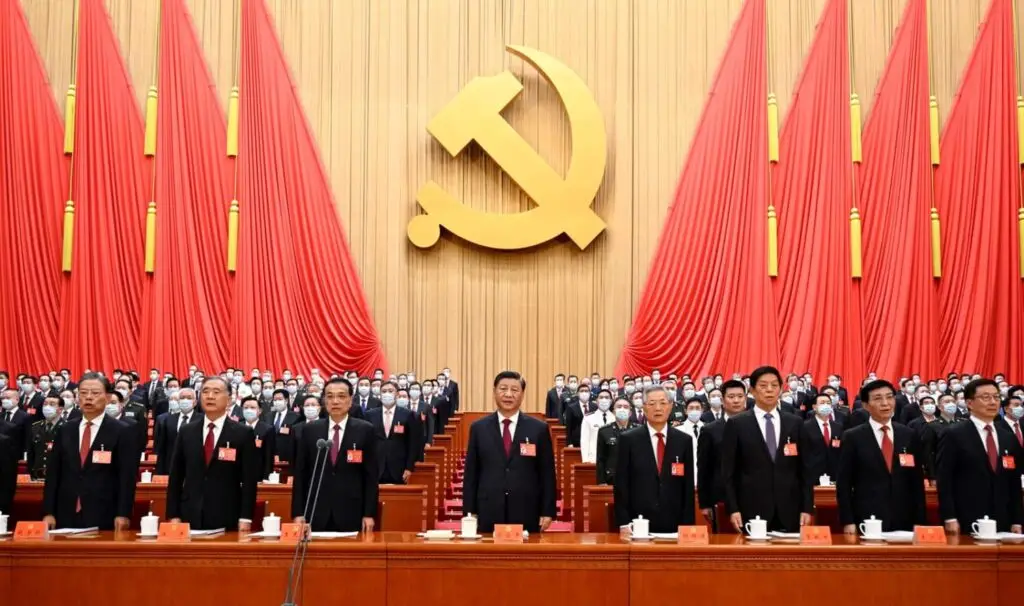
CCP is positioning itself not just as a regional power but as the central player in an emerging new world order. With every move, Beijing is sending a clear signal: the era of Western dominance is drawing to an end, and China’s moment has arrived. In recent years, Chinese Communist Party (CCP) has embarked on a series of bold, strategically transformative initiatives that are not only reshaping global order but also redefining the very concept of national security. Seizing the moment, Beijing has advanced a comprehensive strategy aimed at strengthening its position while challenging post-Cold War world order that has long been dominated by Western powers. The scope of Beijing’s ambitions has expanded to unprecedented levels—ranging from large-scale infrastructure projects spanning continents to advancements in technology and energy. Each initiative showcases a determined effort to reposition China at the centre of a new global hierarchy. Unfolding, an era of calculated moves, technological breakthroughs, and strategic posturing, all of which are poised to fundamentally shift global power dynamics and shape international landscape for decades to come. It started with a quiet, yet signifiant move into the heart of Africa. Under Belt and Road Initiative, a series of 30 clean energy projects has begun to take shape across the continent, weaving a complex web of CCP influence in countries long neglected by the West. Solar farms, wind turbines, and hydroelectric plants are rising where darkness and poverty once reigned, promising economic growth and energy independence. To many, it seems like the kind of philanthropy the world needs—Beijing is playing the role of the benevolent superpower, offering solutions where others have failed. Yet, as Beijing’s footprint expands, its motives become clearer. This is not just about lighting up villages or building infrastructure—it’s about creating a sphere of influence. The “Green Silk Initiative,” as some have called it, is a tool for political leverage, an economic dependency cloaked in the rhetoric of environmentalism and mutual benefit. For the CCP, Africa’s energy future is not just about growth; it’s about aligning a vast continent with its own vision for the global order, a vision that has no place for Western hegemony. Simultaneously, high in the Tibetan plateau, another monumental CCP project is taking shape—one that threatens to reshape the region’s future and leave its critics scrambling for answers. The CCP’s proposed hydropower dam, set to generate 300 billion kilowatt-hours annually, is poised to become the world’s largest hydropower project, with an estimated cost of $137 billion. Beyond the eye-popping numbers, the scale of this project has sparked intense controversy. Tibetan exiles and environmental groups warn that the dam could irrevocably damage fragile ecosystems and desecrate landscapes that have been sacred for centuries. The Dalai Lama, exiled since the CCP’s occupation of Tibet, has repeatedly voiced concerns, cautioning that such large-scale developments, masked as progress, would scar a land steeped in ancient culture and unparalleled natural beauty. For many, the dam is not simply an energy project—it is a symbol of cultural and ecological destruction, a stark manifestation of a regime willing to sacrifice the sacred in its relentless pursuit of power. The ambitions of the CCP, however, extend far beyond energy and infrastructure, reaching into the very heart of technological advancement. The unveiling of the CR450 high-speed train serves as a striking demonstration of China’s emerging engineering prowess, as well as a symbol of its strategy to dominate the global transportation landscape. The CR450, now recognised as the world’s fastest train, is more than a marvel of modern engineering—it is a direct challenge to the West’s technological supremacy. Designed to connect major cities across China with unprecedented speed and efficiency, the train cuts through the landscape with such force that it feels less like a transportation system and more like a statement. The rapid development and deployment of such projects place Beijing not only at the cutting edge of infrastructure but in a strategic position to export its technology globally, further entrenching its economic and political reach across the globe. This is not a game of pure infrastructure, however. As much as the CCP seeks to dazzle the world with its technological feats, it also seeks to control the future of energy and power itself. The “Artificial Sun” project, another CCP innovation, has captured the global imagination. Under the banner of the Celestial Fusion programme, Chinese scientists recently set a world record by sustaining plasma for an unprecedented 1,066 seconds. This achievement, presented with immense fanfare by the Chinese state, positions the China as a leader in the race for clean, limitless energy. But in many ways, the artificial sun represents more than just a scientific breakthrough. For many critics, it is a carefully choreographed piece of state-sponsored propaganda, designed to project power and technological dominance. CCP is positioning itself not just as a global economic power but as a potential monopoly on the energy sources of the future. The implications of such a shift cannot be understated. The ability to control global energy markets and dictate terms for future energy access will fundamentally reshape the power structures of the 21st century. Beijing’s naval ambitions, too, have grown exponentially. The unveiling of the Type 075 amphibious assault ship is a powerful signal of the CCP’s People’s Liberation Army (PLA) growing military might and its intent to dominate the seas. This vessel, one of the largest of its kind, is capable of deploying large forces quickly and efficiently across vast stretches of the ocean. The message is clear: CCP is ready to assert itself as a maritime power capable of protecting its interests in critical regions such as the South China Sea, where tensions with Southeast Asian nations and the United States have been escalating for years.The Type 075, with its cutting-edge technology and imposing size, epitomises Beijing’s broader naval ambitions to challenge both South Asian and Western naval presences in the region. More than just a weapon, the ship serves as a floating symbol of Beijing’s power projection—an embassy on water, reinforcing the message

Terror drones from Pakistan
International Affairs, Security and Defense

Terror drones from Pakistan demand a comprehensive national security response

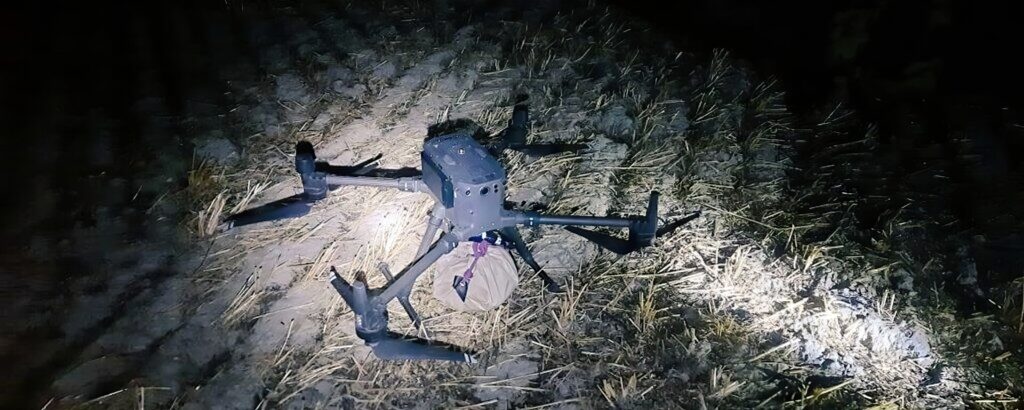
With the threat of terror drones looming large, India needs to urgently evolve a holistic cross-border drone monitoring and interception capability to safeguard its national security The skies over India are becoming battlegrounds for a new kind of threat: terror drones. In the latest incident, Indian security forces recovered an unmanned infiltrating Chinese-made DJI Matrice 300 RTK quadcopter that had infiltrated from Pakistan into the Indian state of Punjab. The discovery of this high-end drone, worth $13,700, highlights the increasing use of advanced aerial technology by nefarious actors across borders. Earlier this week, a drone operated by Pakistan violated Indian airspace from across the international border before being shot down in Rajasthan’s Sriganganagar sector. The Indian Border Security Force recovered five packages of purported narcotics from the drone wreckage. In another illicit cross-border drone activity incident, police retrieved two unassembled improvised explosive devices with detonators, two Chinese-made pistols, four magazines with 60 rounds, and half a million Indian rupees dropped by a terror drone controlled from Pakistan in November last year. These are not isolated instances; the number of “terror drones” flown by Pakistan and used for hostile reconnaissance, drug, weapon, explosive, and ammunition smuggling into India has increased fourfold in Punjab alone since the beginning of 2023. Over the past three weeks, Indian security forces stationed along India’s international border states, particularly Punjab, Rajasthan, and Jammu and Kashmir (J&K), have intercepted more than a dozen terror drones launched from Pakistan. With the threat of terror drones looming large, India needs to urgently evolve a comprehensive cross-border drone monitoring and interception capability to safeguard its national security. In response to this escalating threat, India’s security and law enforcement agencies across India’s bordering states have aggressively enhanced surveillance to deal with the spike in these deleterious infiltrations from across the border. This rapid uptick in terror drone droppings  from Pakistan highlights the need for a more rigorous countrywide strategy to safeguard India’s national security. The sordid reality of Pakistan’s involvement in narco-terrorism is a well-known fact. This is not hearsay but has been acknowledged by the United Nations Office on Drugs and Crime (UNODC), the International Criminal Police Organization (INTERPOL), the European Union Agency for Law Enforcement Cooperation (EUROPOL), and even at global forums and trade unions such as the Financial Action Task Force (FATF) and EU’s Generalised Scheme of Preferences (GSP+). Earlier last year, FATF demanded that Pakistan prove that it had taken decisive measures against terrorism to avoid being consigned to the dreaded FATF grey list yet again. Pakistan government’s backing for terrorism has also been scrutinised recently, particularly during its attempt to revive a 2019 bailout agreement with the International Monetary Fund (IMF). Grave concerns over the use of the bailout money had been raised in the context of Pakistan’s state sponsoring of terrorism. Pakistan, with the sinister intention of waging asymmetrical warfare against Indians by fostering secessionism and terrorism in India, has been notorious for its lack of development policies, an acute disregard for the well-being of its citizens, and its concentration of efforts on fomenting jihadist extremism and sponsoring terrorism against India, which has led to its ultimate downfall. The country has become a classic case study for the world to see as an example of how states that harbour and endorse extremism, sponsor terrorism, and lack coherent plans for their people’s growth and development are bound to fail. Concerningly, the increasing and escalating use of terror drones launched from Pakistan against India epitomises the mindset of the country’s deep state and army. Alarmingly, Pakistan seems to have decided to persist in diverting its valuable resources towards supporting terror, thereby continuing to nurture the monster of terrorism that it created, even though it has already bankrupted the country. By resorting to narco-terrorism and promoting violent extremism to destabilise India, and significantly to weaken its youth, Pakistan is exposing itself to further extreme scrutiny from its financial backers, organisations, unions and nations that greatly benefit it. Pakistan has active loans from international lending agencies such as the International Monetary Fund (IMF), the Asian Development Bank (ADB), and the Asian Infrastructure Investment Bank (AIIB), among others. It is also a partner in the Paris Pact Initiative, which seeks to combat opiate trafficking, consumption and related issues along the Afghan trafficking routes. More so, Pakistan is a beneficiary to Europe’s preferential tariff programmes, including the GSP+. However, Pakistan’s blatant support for organised crime, extremism and terrorism has seriously undermined its credibility. As a result, these agencies and entities have imposed new stringent rectification requirements on Pakistan’s support for terrorism and extremism to maintain their support. At this critical juncture, it is essential for the international community to recognise the severity and consequences of Pakistan’s aggression by use of “terror drones” against India. Its obstinate commitment to pursue this perilous path endangers not only regional but also global peace and security. More-so, the global community should also pay attention to countries that enable and endorse Pakistan’s actions towards this direction. China’s role  For example, Pakistan’s all-weather friend, the Chinese Communist Party (CPC) ruled China, which boasts a friendship “higher than the Himalayas, deeper than the ocean, sweeter than honey, and stronger than steel” with Pakistan. Recent recoveries of Pakistan-operated terror drones and dropped weapons in Indian territory provide tangible physical evidence of Chinese technology, equipment, and weaponry being used for narco-terror and related terrorist activities in India. A significant proportion of drones that Pakistan employs for cross-border operations in India are supplied by the Chinese firm, SZ DJI Technology Co. Ltd, commonly referred to as DJI. In December 2020, the US government listed DJI on a trade-restricted list due to concerns about its connections to the (CPC) government. It is worth noting that some of the batteries used to power these drones are manufactured by a company based in Karachi, Pakistan. Despite the CPC’s public declarations of unwavering commitment to combat international terrorism, doubts have arisen due to its persistent support for Pakistan and treatment of Uyghur Muslims. Nevertheless,

Scroll to Top