
China did not start this war and will not finish it. What it will do is walk away with something more valuable than victory; the data, the proof, the blueprint for the confrontation it is quietly rehearsing on the other side of the world in the western Pacific.
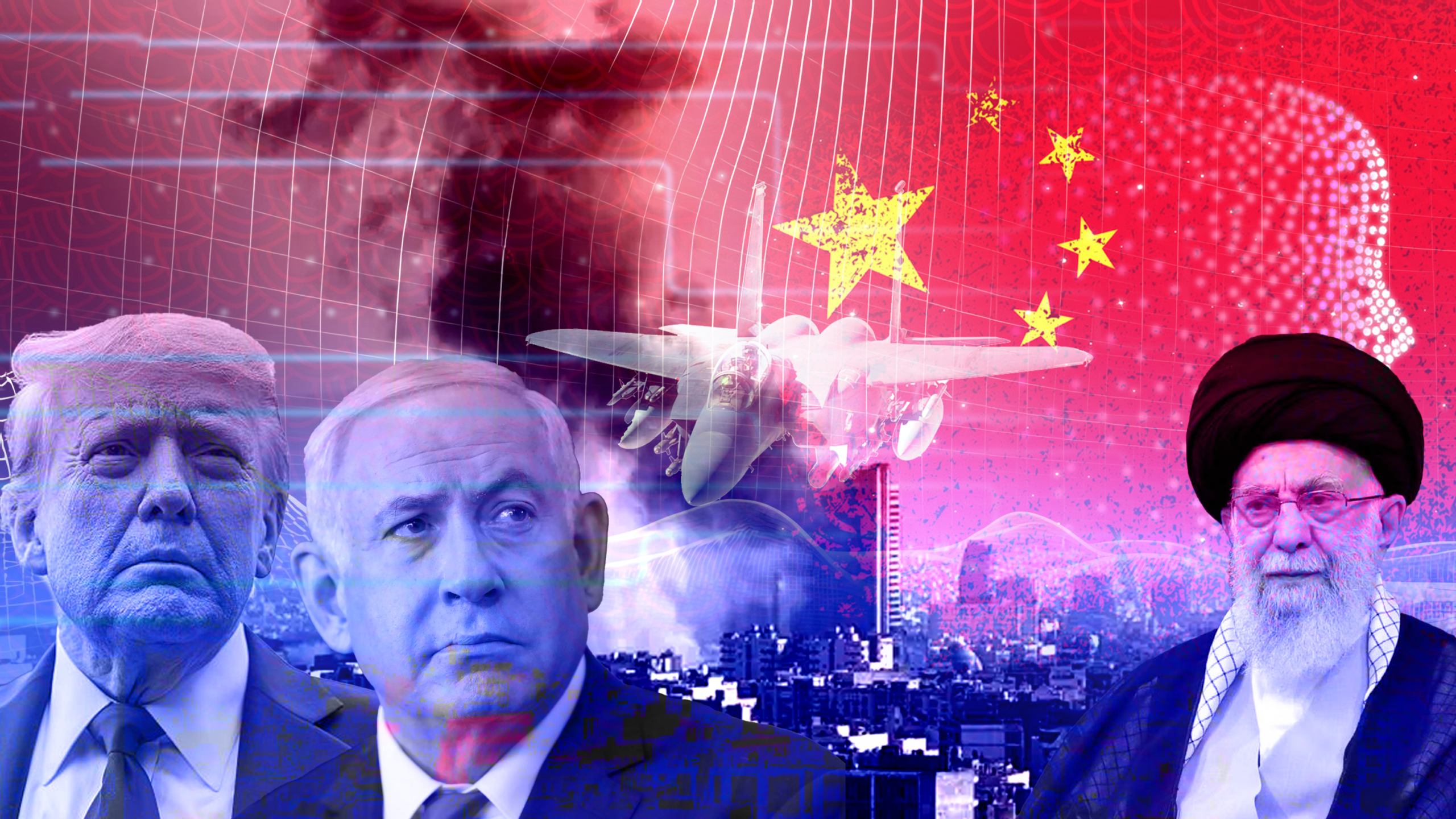
When three American F-15E Strike Eagles spiralled out of the sky over Kuwait on the night of March 1, the story that dominated headlines was one of tragic friendly fire. Kuwaiti Patriot batteries, overwhelmed by the sheer volume of Iranian drones and ballistic missiles crisscrossing the Gulf, misidentified their own side’s aircraft in a chaotic, saturated battlespace. All six aircrew ejected safely. The jets did not survive.
CENTCOM was unambiguous: friendly fire in a saturated sky, not Iranian action. Iranian state media claimed otherwise. The Pentagon held its line. But the deeper question remains: why that sky was so saturated in the first place. The answer leads not to Tehran. It leads to Beijing.
China has not fired a single shot in this war. It has condemned the strikes on Tehran as violations of international law. And yet the weapons flying over the Gulf, the drones that refused to be jammed, the missiles that found their targets, the internet blackout sealing 93 million Iranians from the outside world, all rest on a technological architecture Beijing spent a decade carefully constructing. Not as charity. As a field test.
This is the war behind the war. China using Iran as a live laboratory for systems it will one day need against adversaries whose weapons it is now learning to defeat. Every drone that navigates through Western jamming. Every radar that acquires a stealth aircraft. Every $20,000 drone that forces the expenditure of a $4 million Patriot interceptor. Beijing is watching, logging, and learning.
The most operationally significant Chinese technology active in this conflict is BeiDou-3, China’s sovereign alternative to GPS. Following Isreal-Iran’s Twelve-Day War last year, in which GPS spoofing partially blinded Iran’s guided munitions, Iran drew a hard lesson. It formally abandoned the American system and transitioned its military navigation architecture to BeiDou. The encrypted network resists allied electronic warfare; its integrated short-message service sustains command node communication even when terrestrial infrastructure is destroyed.
Iran’s 2026 missile campaign has demonstrated navigational resilience its 2025 predecessor lacked, striking targets across all six GCC states simultaneously and forcing the UAE alone to intercept 161 of 174 ballistic missiles fired at it. But BeiDou is not merely Iran’s tool. It is China’s proof of concept, a navigation system battle-hardened against the world’s most sophisticated jamming apparatus, stress-tested under real combat conditions. The telemetry flowing back to Beijing from every Iranian strike package is worth more than any simulation its engineers could run.
The same scenario applies to the YLC-8B anti-stealth radar, reportedly transferred to Iran after the 2025 war. Engineered to operate on VHF frequencies that defeat radar-absorbent coatings, it addresses the defining challenge of modern air warfare: how do you acquire what your adversary designed to be invisible? Whether the YLC-8B batteries survived the opening strikes of Operation Epic Fury remains unclear, the IDF claims over 200 Iranian air defence systems destroyed. But even degraded performance data feeds directly into China’s own development cycle. Iran is the test range. The PLA is the end customer.
This Chinese pattern of real-world testing was visible long before this war. Last May, during India’s Operation Sindoor strikes on terrorist and Pakistani army infrastructure, Chinese-origin PL-15 beyond-visual-range missiles and HQ-9 surface-to-air systems were active on the Pakistani side. Beijing opportunistically leveraged the conflict to test its weapons in live combat. It did not stop at data collection. The US-China Economic and Security Review Commission confirmed that China deployed fake social media accounts to circulate AI-generated imagery purporting to show debris from aircraft destroyed by Chinese weapons. A deliberate campaign to discredit India’s Rafale purchase and advance sales of China’s J-35. Chinese embassy officials reportedly persuaded Indonesia to pause a Rafale procurement already in process. Beijing said nothing publicly. It did not need to.
Iran and Pakistan have become China’s two most valuable proving grounds. One tests area-denial and air defence against American and Israeli platforms. The other tests beyond-visual-range air combat against Indian platforms. China supplied roughly 82% of Pakistan’s arms imports between 2019 and 2023, it had substantial strategic investment in the outcome. Together, both theatres are delivering what no exercise can replicate: live performance data against real Western hardware.
The supply chain completes the picture. On February 25, three days before the strikes began, the US Treasury sanctioned procurement networks supplying precursor chemicals and sensitive machinery to Iran’s IRGC missile and drone programmes, following 2025 designations of six Hong Kong and PRC-based entities feeding Iranian arms production. The $20,000 drones flooding the Gulf, cheap enough to force the expenditure of interceptors costing two hundred times more are products of that chain. A think tank report warned that US high-end interceptors including SM-3, PAC-3 MSE and THAAD could be depleted within days of sustained high-tempo operations. That attrition calculus is now live.
Away from the battlefield, Iranian internet connectivity has collapsed to roughly 4% of normal levels. The tools enforcing that blackout bear Chinese brand names: Huawei and ZTE deep-packet-inspection platforms, Tiandy facial-recognition hardware explicitly supplying the IRGC. The function is unambiguous; seal the population off, suppress evidence of military degradation, keep the regime viable long enough to matter.
Prima facie, none of this has made Iran invincible. Khamenei is dead. The IDF has conducted over 700 strike missions. What Chinese technology has done, in both theatres, is keep the fight going longer than it otherwise would have, and send data back to Beijing that no laboratory can replicate. The drones are still flying. The missiles are still navigating. The lights inside Iran are still off. And in Beijing, someone is taking very careful notes. Preparing for the western Pacific.