In Pakistan’s largest province, Baloch families no longer ask only whether their loved ones will come home. They ask whether they will return alive, broken, or as a body left by the roadside.
In Balochistan, disappearance has become more than an allegation. It has become a method of rule, a language of fear, and, for many families, the most intimate face of the Pakistani state. A son leaves for college and does not return. A brother is picked up at a checkpoint and vanishes into an unmarked system. A body appears days later, bearing the marks of custody but not the burden of official acknowledgment. This is why the crisis in Balochistan can no longer be described as a peripheral human-rights issue. It now sits at the centre of the province’s politics, shaping how the state is seen, how dissent is expressed, and how the conflict itself reproduces.
Balochistan has never sat easily inside Pakistan. Forcibly annexed in 1948 through military aggression, the province has been governed less as a constituent territory than as an occupied resource frontier, its people subjected to successive military operations, its political leaders jailed, exiled, or killed, its wealth extracted while its communities remain among the poorest in South Asia. The Pakistani army, the Inter-Services Intelligence directorate, and the civilian bureaucracy that answers to both have together built an architecture of control in the province that relies not on consent but on coercion. Enforced disappearance is its sharpest instrument.
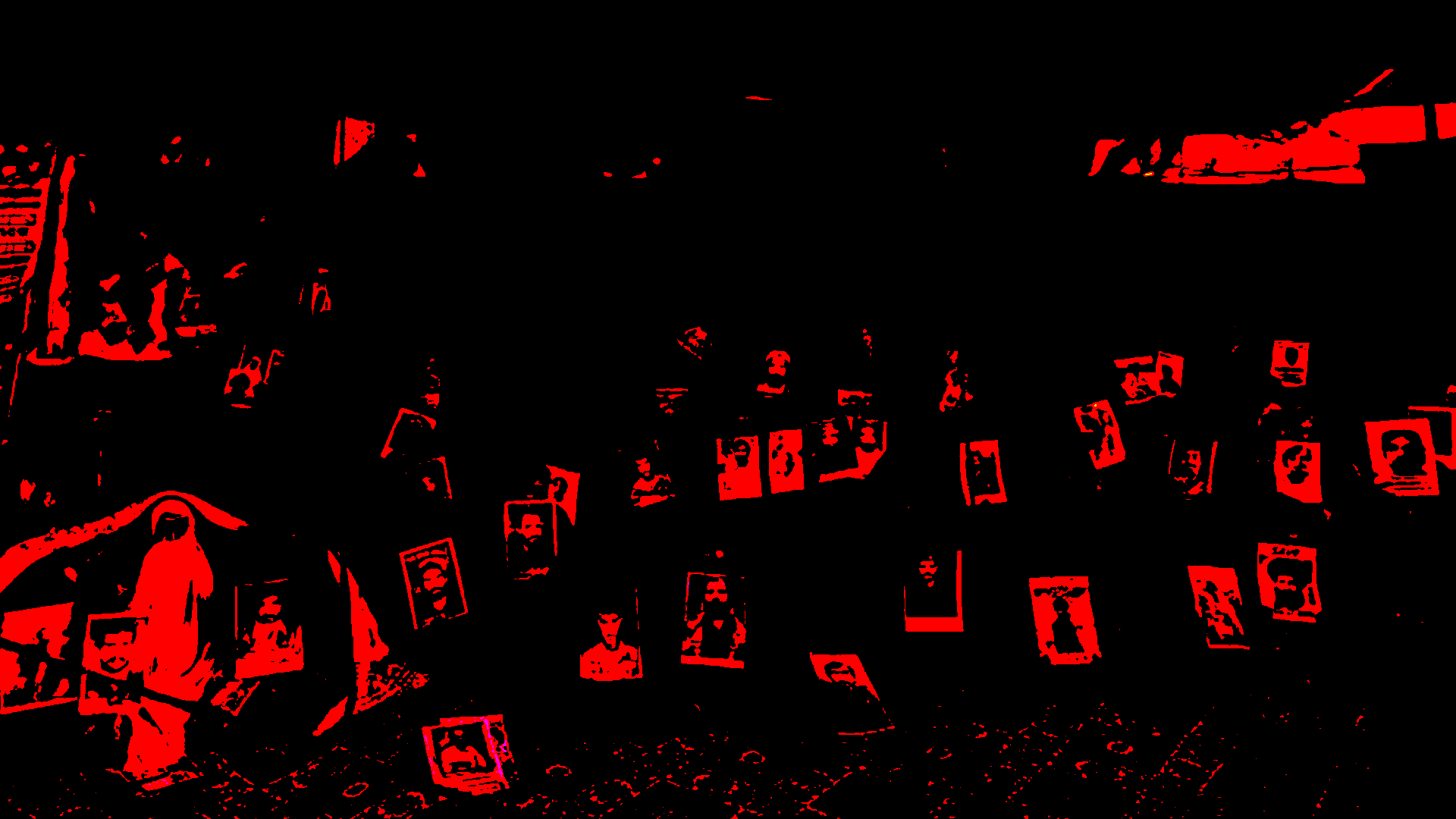
For years, Baloch families have spoken of men seized from hostels, lifted from homes in front of witnesses, or taken at security posts, only to disappear into a military and intelligence maze that rarely concedes it holds them. What follows has hardened into ritual: protests outside press clubs, sit-ins on national highways, petitions before courts that issue orders the deep state ignores, and mothers holding photographs that become, with time, the only official record they possess.
Paank, the human-rights wing of the Baloch National Movement, documented 1,355 enforced disappearances in 2025 and 225 killings it describes as extrajudicial. Its monthly tallies show the pattern continuing into 2026, with 82 disappearances in January and 109 in February. These are activist figures but even if read conservatively, they describe something far larger than sporadic abuse. They describe a system that is persistent, province-wide, and increasingly willing to move from secret detention to what families and activists have long called “kill and dump.”
That charge now carries weight beyond the activist circuit. After a fact-finding mission to the province, the Human Rights Commission of Pakistan called enforced disappearances Balochistan’s most urgent human-rights crisis and said testimony from victims and families pointed to a practice that had become systematic. Drawing on police data shared during its visit, HRCP reported 356 disappearance cases, of which 116 people had been traced, 36 were removed for incomplete information, 12 were listed as killed in police encounters, and 192 remained unresolved. Balochistan police alone registered 46 new cases in 2025. More alarming still, the commission described what witnesses called a faster “kill-and-dump cycle,” in which the interval between abduction and the recovery of a body appears to be shrinking.
The targets are students, activists, human-rights defenders, journalists, and politically vocal young men and women. Anyone who speaks for Baloch rights, organises peacefully, or simply draws attention risks being categorised by the ISI and military intelligence as a threat to national security. HRCP documented that students had been surveilled and pressured over political expression on campus. In March 2025, UN special procedures experts demanded the release of detained Baloch human-rights defenders and called for an end to the crackdown on peaceful protest. A month later, the same body warned of the “unrelenting use” of enforced disappearances in the province and pressed for independent investigations, criminal accountability, and protection for victims families. The Pakistani state presents Balochistan through the vocabulary of security. The rights record reveals something closer to collective punishment of an occupied people.
Islamabad’s counter-narrative rests on the existence of a separatist insurgency. After the March 2025 Jaffar Express attack, the Pakistan Army and the ISI found fresh justification for a harsher crackdown across Balochistan. But this repression is not an aberration. It is the logical outcome of decades of military control, resource extraction without political representation, and a security order that has long treated the Baloch as a population to be managed rather than Baloch to be heard.
Pakistan’s institutions acknowledge the problem, but only in the bloodless language of bureaucracy. In October 2025, the government reported that the Commission of Inquiry on Enforced Disappearances had received 10,636 cases nationwide since 2011, disposed of 8,986, and left 1,650 under investigation. The numbers give Islamabad a defence of procedure. They do not answer the question that shadows Balochistan: why, after years of commissions, petitions, and court orders, do disappearances remain woven into everyday life? Why do families still pass between morgues, protest camps, police stations, and roadsides searching for men the state insists it cannot find?
The answer may be that disappearance has outgrown its origins as a tactic. It has become governance by intimidation, the organising logic of an occupation that cannot justify itself by any other means. Each abduction removes one person but disciplines an entire social circle: a family that stops speaking, a campus that falls quiet, a town that learns the price of visibility. HRCP warned in 2025 that shrinking civic space, institutional impunity, and the conflation of human-rights advocacy with militancy were deepening alienation across the province. Here lies the central paradox of Pakistan’s campaign in Balochistan. It is designed to suppress dissent, yet it multiplies grievance. It is meant to restore control, yet it steadily drains the state of legitimacy.
Balochistan’s disappeared are not merely a humanitarian ledger. They are the human index of a military occupation failing in plain sight. A state can compel silence for a time. It can deny custody, delay hearings, disperse protests, and reduce the missing to rows on a spreadsheet. But when disappearance becomes routine, the state stops projecting strength and begins broadcasting fear, its own. In Balochistan today, that may be the most revealing truth of all: Pakistan’s harshest instrument of control is also the clearest measure of how much control it has already lost.